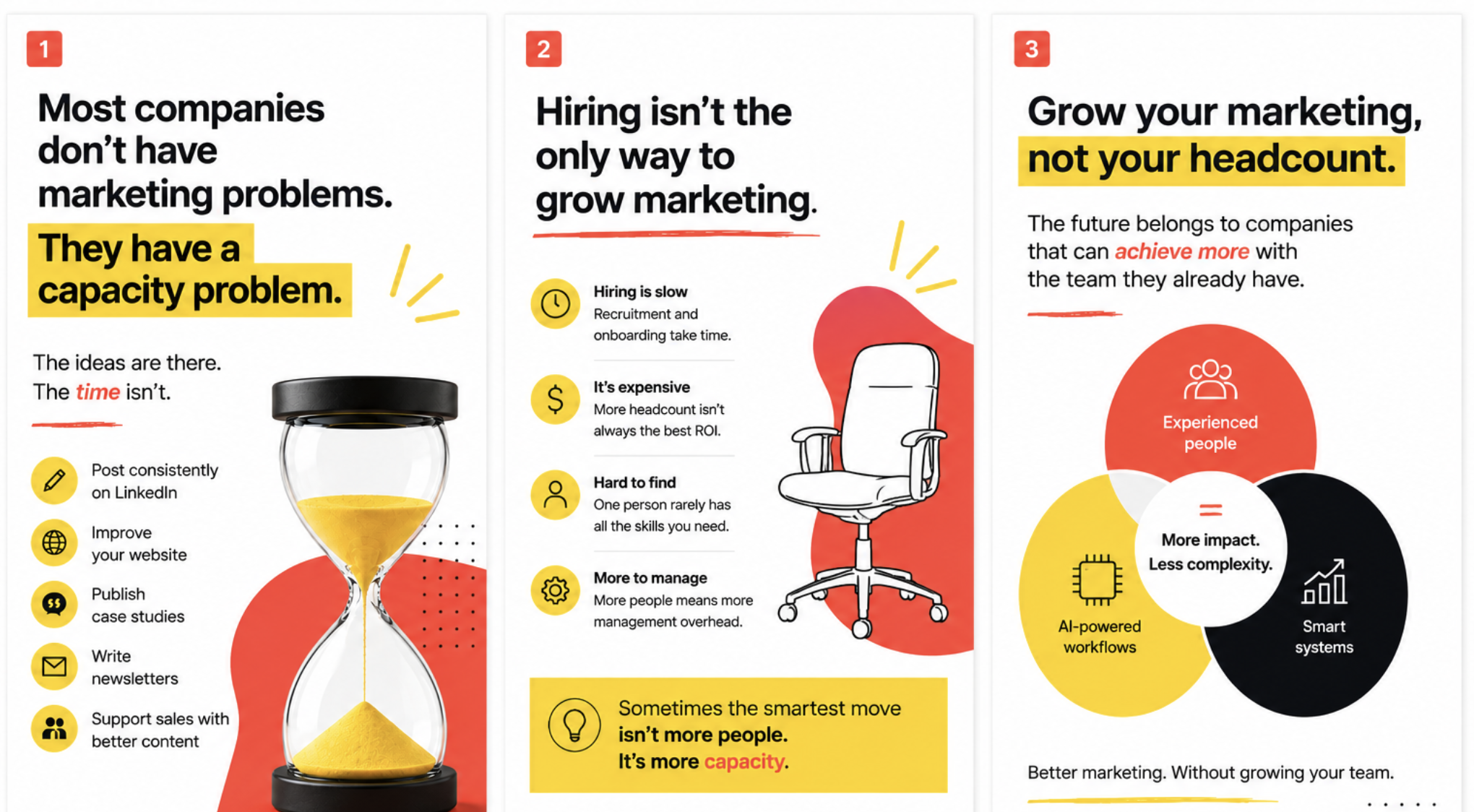
Most small B2B companies handle content marketing one of three ways: nobody owns it and it happens sporadically, someone senior does it alongside their real job, or it gets outsourced piecemeal to freelancers. All three break down without a repeatable system, not more marketing skill.
Why the usual approaches break down
Nobody owns it. Content becomes a "someday" task. Weeks go by with nothing published, then a founder panics and posts five times in one day. No consistency means no compounding.
A senior person does it on the side. Usually a founder or account lead. It works for a few weeks, then a busy month hits and content is the first thing to slip, because it's nobody's actual job.
Piecemeal freelance help. A freelancer writes when briefed, but nobody's briefing them consistently, and there's no one connecting content back to what's actually happening in the business.
The system that actually holds up
The common thread in companies that do this well: one person owns the system, but they don't create everything themselves.
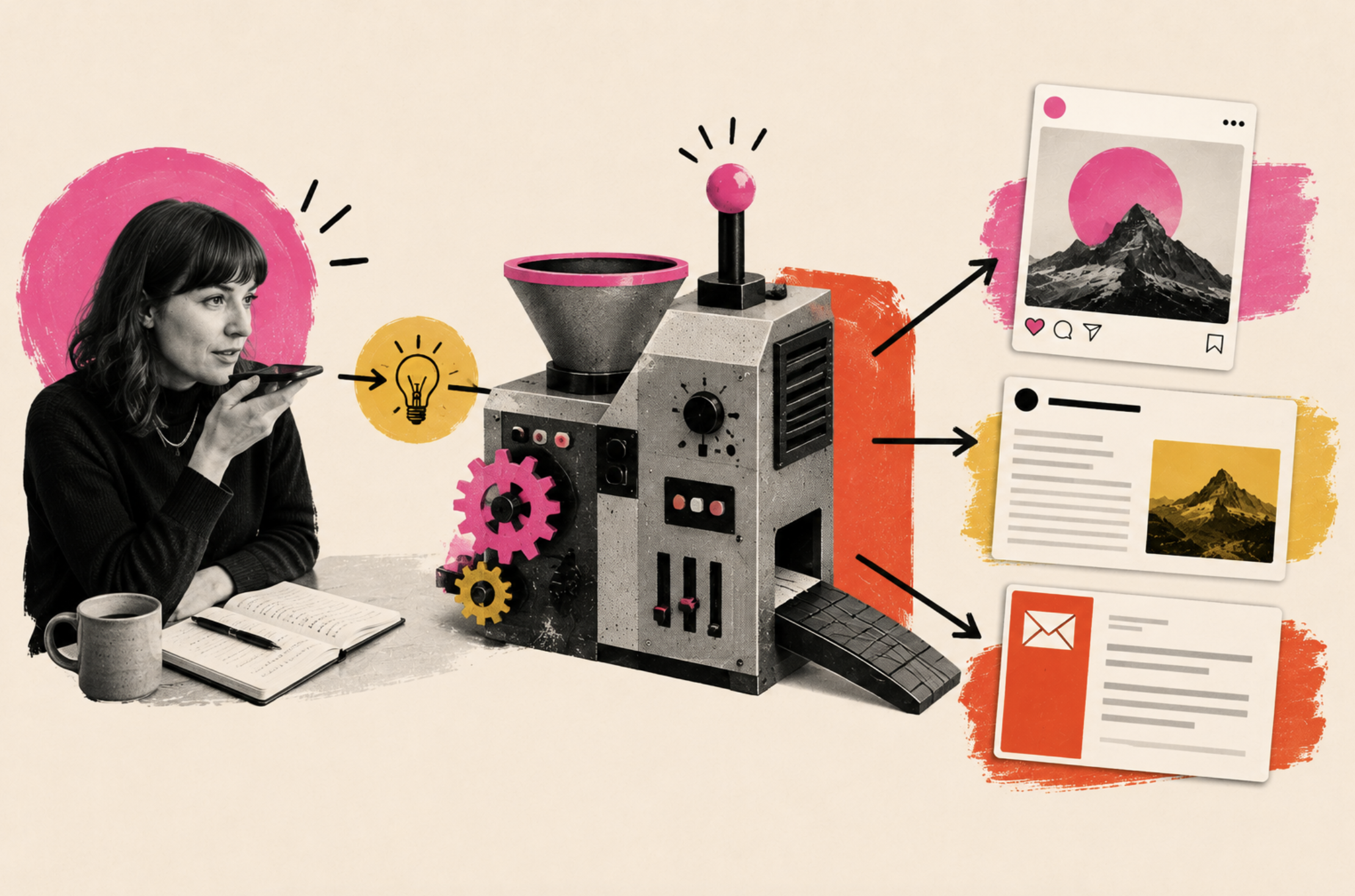
Content becomes a byproduct of expertise the company already has, not a separate project:
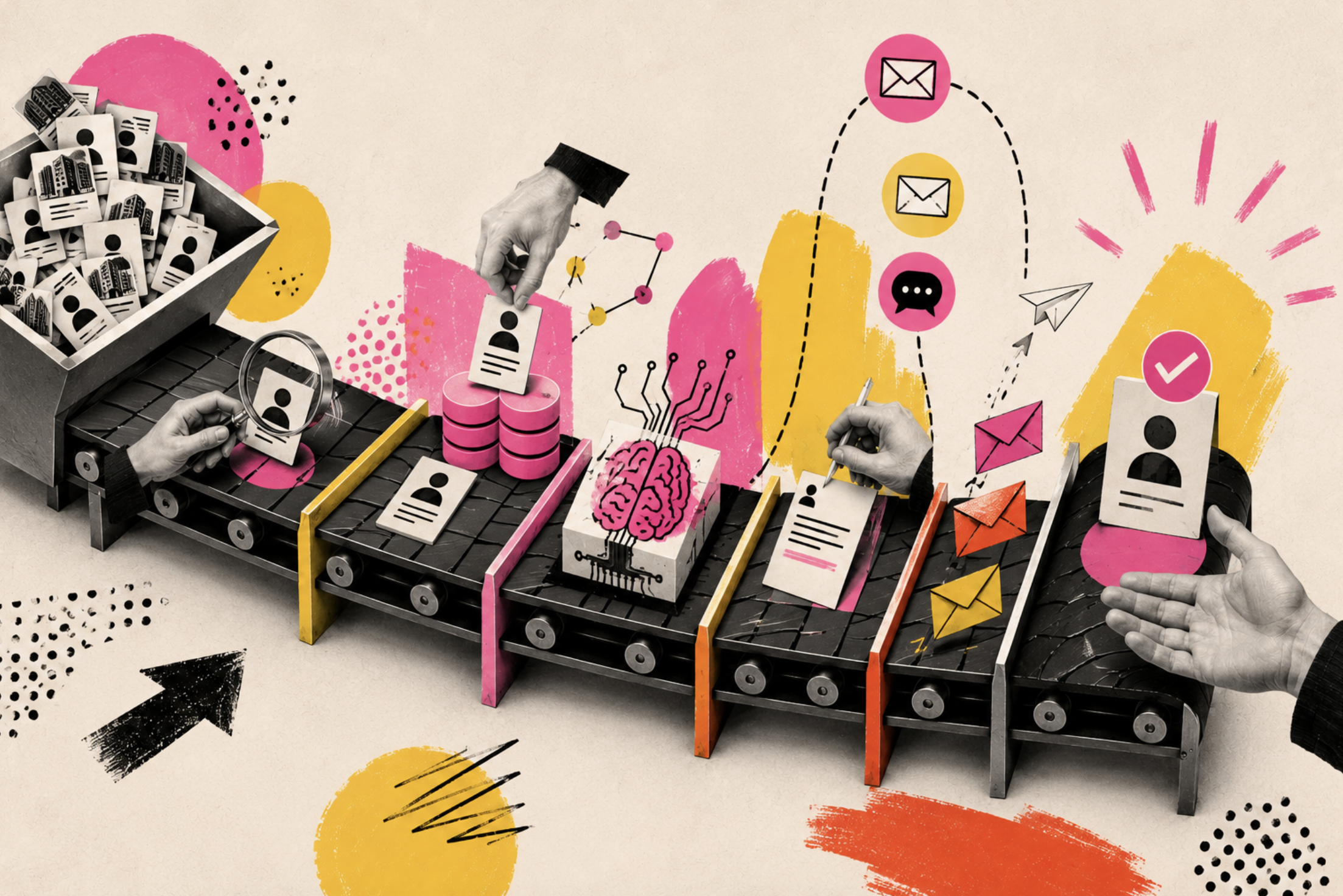
Customer question or objection → someone captures it → the expert explains it in a few minutes → that gets turned into content → it gets published → it gets used again in the next sales conversation.
For example: a prospect asks "why can't we just do this ourselves?" A salesperson notes it. The founder explains the real answer in a 10-minute voice note. That becomes a LinkedIn post, a line in a sales email, and part of the website FAQ: three assets from one five-minute conversation.
A simple three-part structure
Pick one channel. Most small B2B companies spread themselves across LinkedIn, a newsletter, SEO, and more, and end up doing all of them badly. Pick the one where your buyers already pay attention and go deep there first.
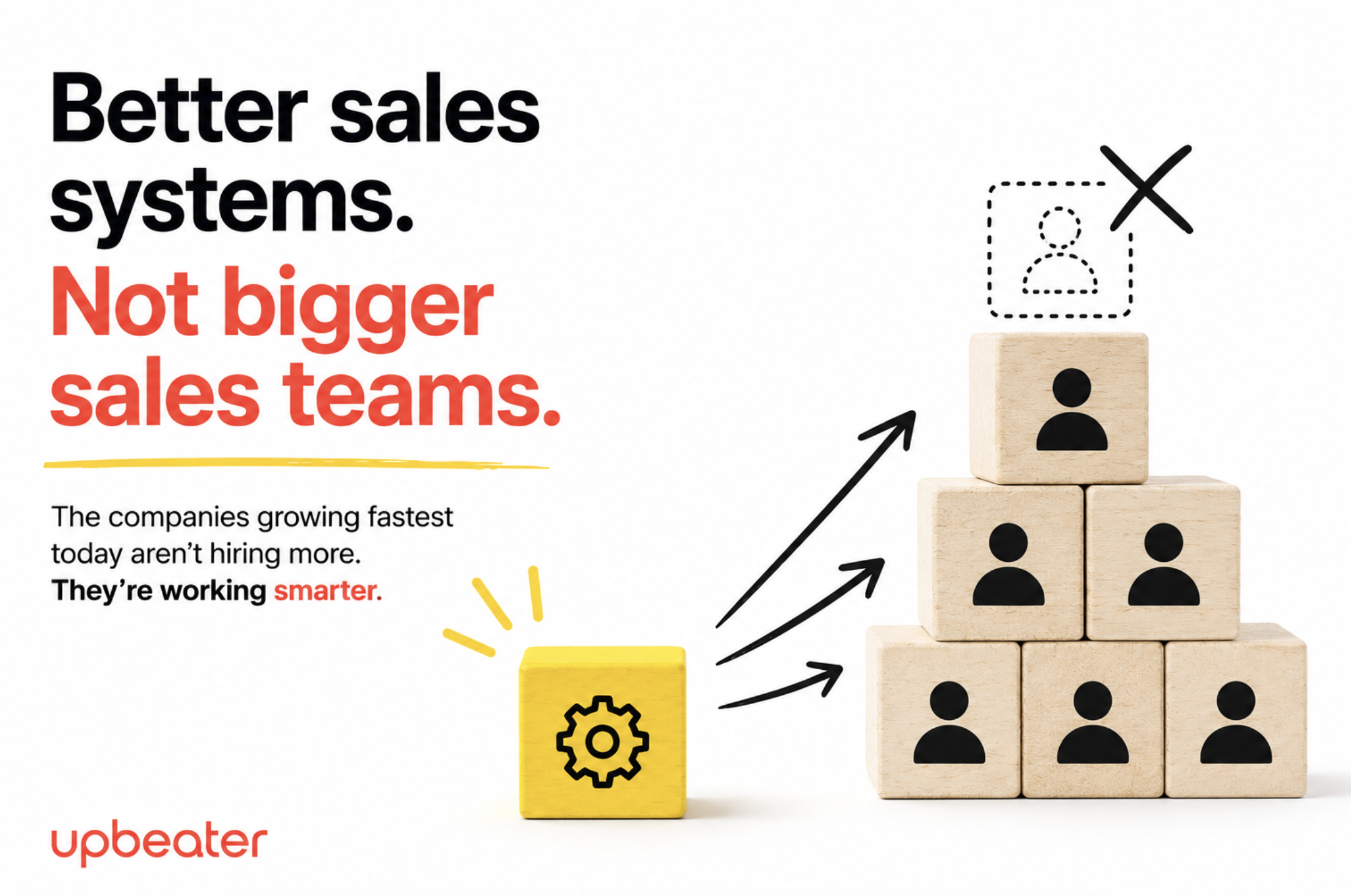
Separate ownership from production. One person (usually the founder or a marketing lead) owns the calendar, the raw material, and final approval. They don't have to write every post themselves; that's the part that can be delegated, automated, or handled by a managed service.
Publish less, but consistently. One genuinely useful post a week beats five mediocre ones. The goal is qualified conversations, not impressions.
Where a managed service fits
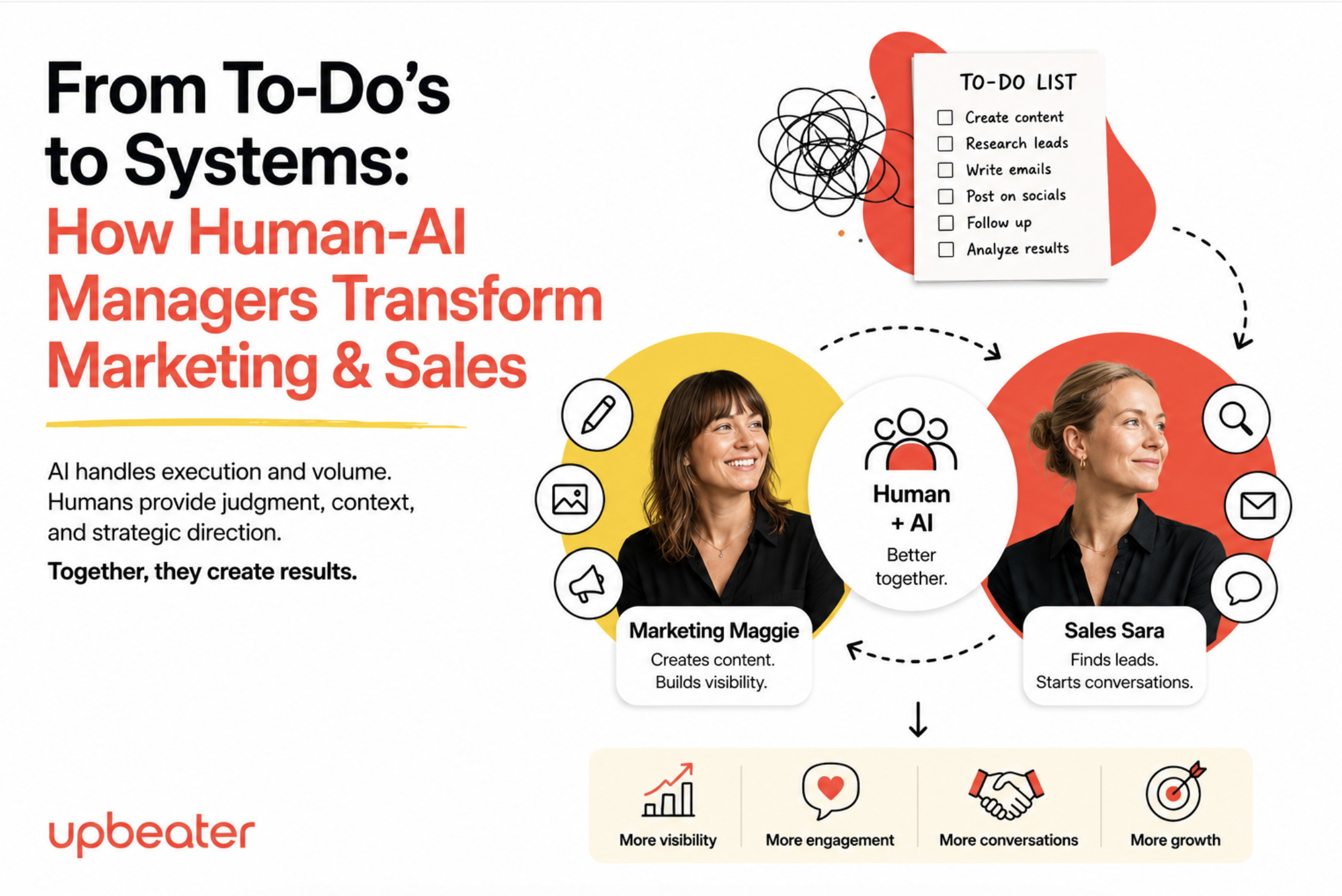
This is exactly where Marketing Maggie sits: you and your team stay the source of raw material and final approval, and AI handles the production (drafting, formatting, and scheduling) with a human reviewing everything before it publishes. You're not hiring a marketer, and you're not trying to be one yourself.
Not ideal for: if your company doesn't yet have a clear point of view on who you serve and why, fix that first. A system for producing content doesn't replace having something worth saying.
Frequently asked questions
How do small B2B companies do content marketing without a dedicated marketer? The ones that do it well separate ownership from production. One person owns the calendar and approves what goes out, but the actual writing and formatting is delegated, automated, or handled by a managed service, not squeezed into a senior person's spare time.
Who should own content marketing if we don't have a marketer? Usually the founder or whoever is closest to the customer, since they generate the raw material (objections, questions, stories) that content is actually built from. Ownership doesn't mean doing all the writing yourself.
Is content marketing worth it for a small B2B company without a big budget? Yes, if it's tied to real expertise and used consistently. A post seen by 500 relevant buyers is worth more than one seen by 50,000 random ones: the goal is qualified conversations, not reach.
How is this different from just posting occasionally on LinkedIn? Occasional posting has no system behind it, so it depends entirely on someone remembering to do it. A system separates the raw material (which comes from the business) from the production (which can be delegated), so it keeps running even in busy weeks.
Curious how Marketing Maggie would work for your business? Book a demo and we'll walk you through it.